Professional Learning Network

Image sources from Pixabay

Initial PLN – The Starting Point

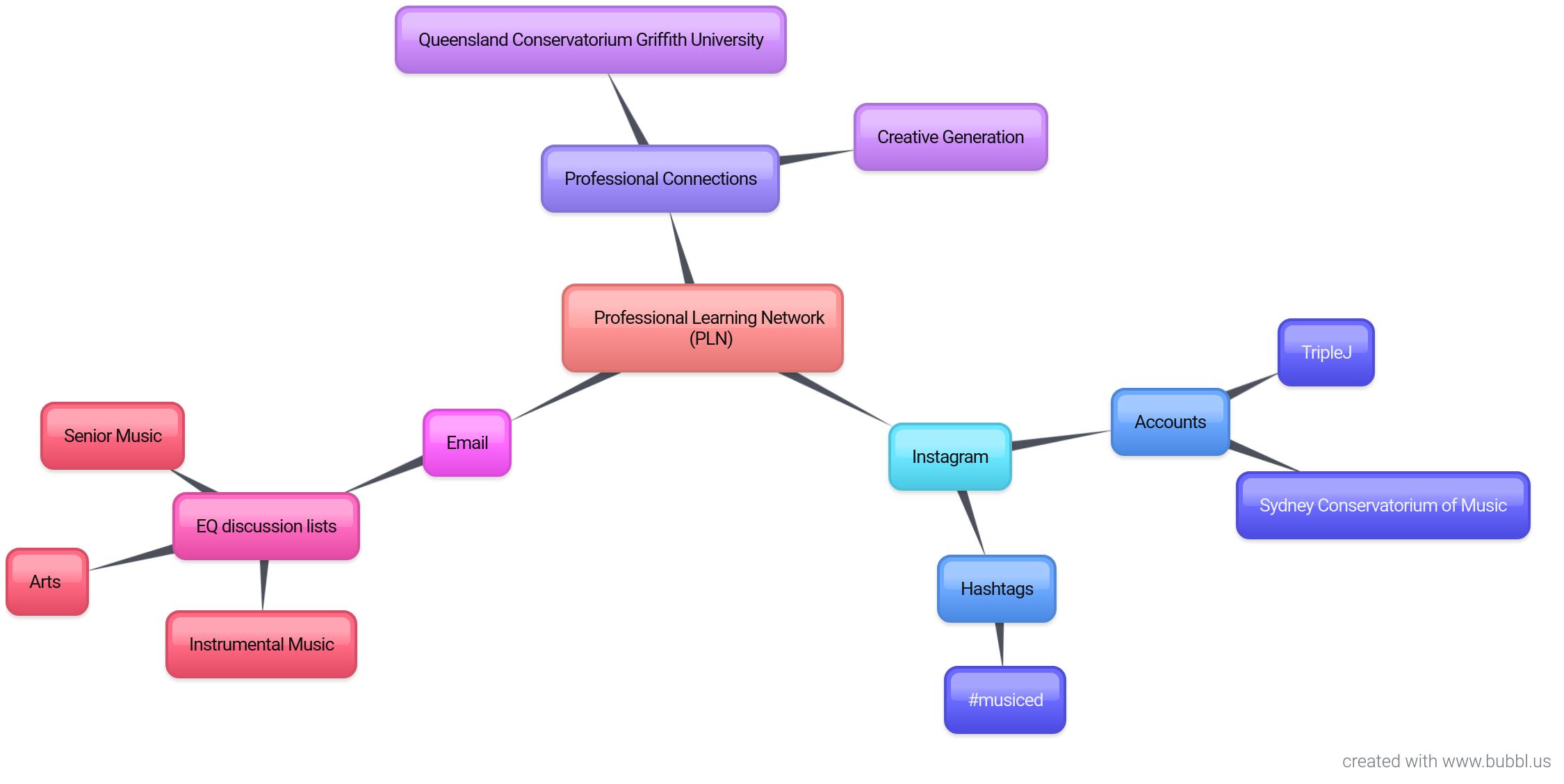
Professional Learning Networks (PLN) “can be understood as learning systems built upon an architecture of participation that can come to exist with or without specific objectives” (Carpenter, Krutka, & Trust, 2016b, p. 17).  A PLN has the ability to allow teachers and instructors to be part of an equal sharing and learning platform; this can break down the traditional hierarchy found in some learning environments (Carfagna, 2014).  The broad focus within my PLN is Music Teaching; with the specific focus of improving my teaching practice, classroom activities and curriculum development.  In early 2019 my PLN was mapped to outline the connections within my network.  As seen in the image below there are very few social media accounts, hashtags and external connections within the network. 
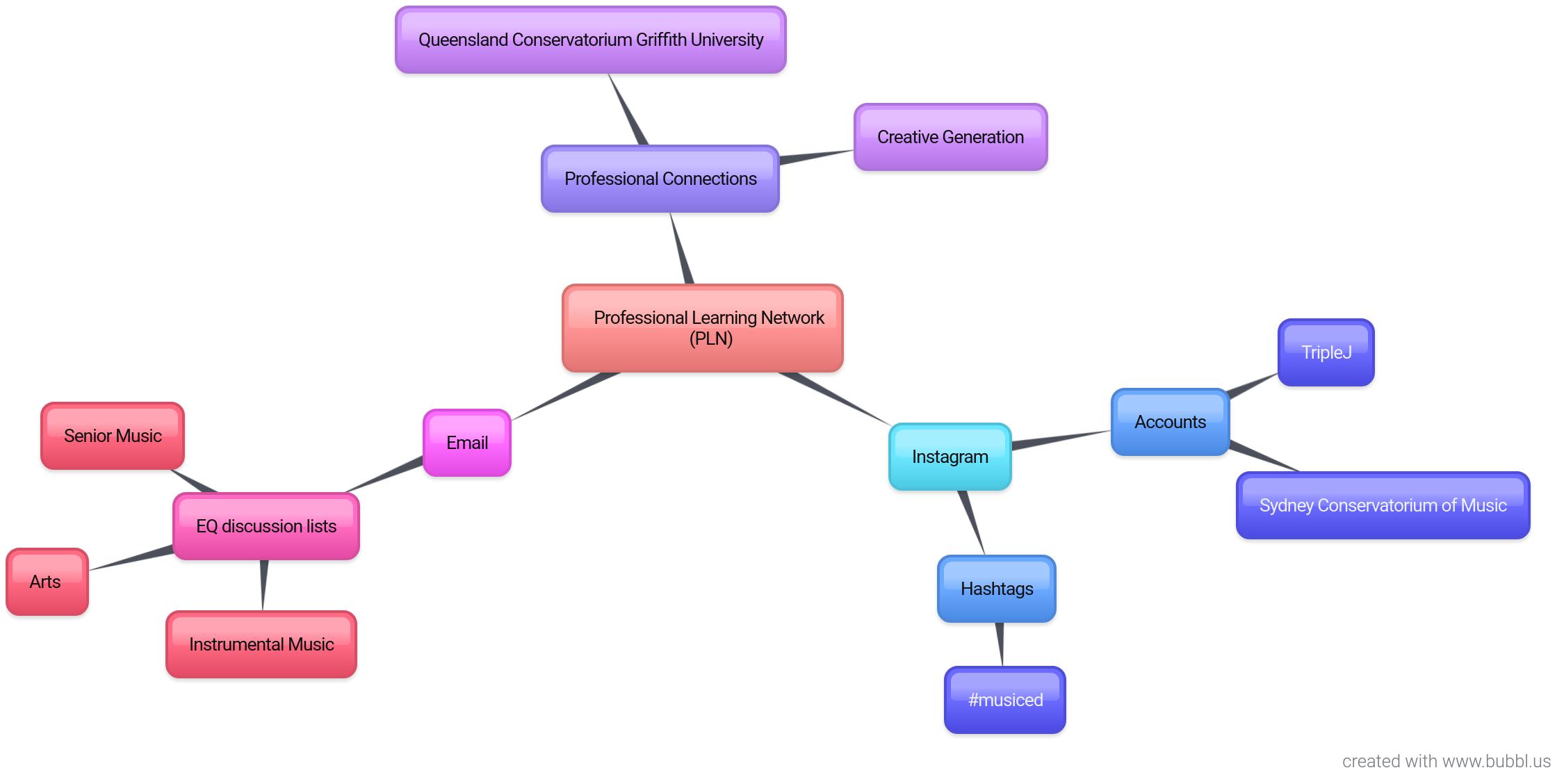
Initial PLN Map – February 2019

The Music Teaching network is quite active.  Many teachers are sharing via hashtags on various social media platforms.  There are many worthwhile hashtags and accounts to follow.  On Twitter the #MusicEd hashtag has on average 40+ tweets daily. Instagram has a similar figure of daily posts via #MusicEd. While the Facebook group (Queensland 2019 Senior Music/Music Extension Syllabus Teachers) only has an average of 2-5 posts daily.  These consist of posts from professionals, teachers and other education providers whose activity on social media also assist in my PLN.  
Within this blog, my PLN will be mapped, analysed and reflected on in order to see how my PLN has developed through the introduction of social media and active participation.  


“Individual agents engage in these systems through various forms of participation – from committed engagement to more peripheral lurking – that are generally transactional in nature. In other words, as people participate in a system, they change it, and the system changes them. The responsive nature of PLNs might offer teachers access to interactions and resources necessary to grow professionally” 

Carpenter, Krutka, & Trust, 2016b, p. 17

Developing My PLN 

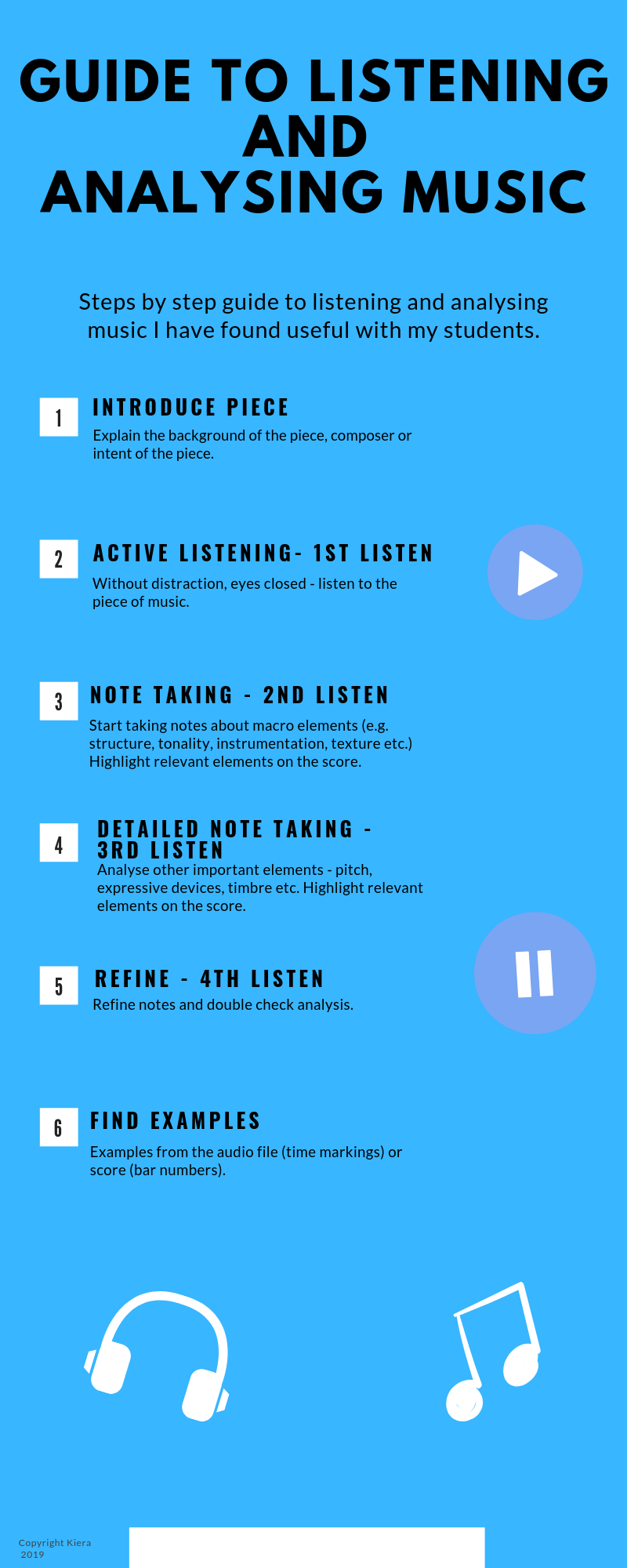
As it can be seen in my initial PLN map, there weren’t many connections in February 2019.  Before this unit of study I was collaborating and contributing within my limited network, which mainly consisting of teachers within my school context or close teacher friends.  I would rarely like, comment, share or post content about Music Teaching.  Since studying this unit, I have been able to experience first-hand the benefits of a PLN.  The contributions I have made to my PLN can be found here.  The first contribution was an infographic about the steps in analysing music for students.  The purpose of this was to share what is working with my students and hope that others would find it useful.  “PLNs provide educators with greater access to the classroom-informed and tested ideas of peers” (Carpenter, Krutka, & Trust, 2016a p. 155).  The second contribution was a blog post outlining how my teaching has changed and developed over the last few months after the introduction of the new Senior Syllabus in Queensland. Within this post I shared a key or legend which was introduced to the senior students in order to assist their music analysis tasks.  In sharing my experiences about the new syllabus with other teachers, I was able to feel “… a sense of companionship in the face of demanding tasks and learning challenges” (Wenger, 2011).  If others know they are not alone it might assist in their teaching and classroom activities.  

Linking, stretching and amplifying are terms which outline the learning experiences and key characteristics a connected professional will transition through (Oddone, 2019b).  Oddone (2019b) defines these three experiences as: 

  • Linking is associated with problem-solving particular professional learning needs within a short term or immediate timeframe.  
  • Stretching involves extending the individuals learning through the network through discovery or curiosity. 
  • Amplifying is associated with the creation, sharing, distributing and collaboration of resources and information within the network.    

The artefacts shared within my network would be considered linking as they were targeting specific issues.  As I am still building my network, there were limited opportunities for amplifying and stretching. These will come with time. 

It was reflected upon as to why the artefacts that were presented had limited interactions from my PLN.  The first infographic was intended to help others who are teaching aural and visual music analysis.  I have tried this model within my classes, and it has proved to work, increase engagement and build their subject knowledge.  The students have made the process a habit now.  There was a great number of impressions for this post but only one like – the break down of the activity can be seen below. Through the Twitter hashtags used in the posts, I was able to reach a bigger audience, both within Australia and potentially internationally.  
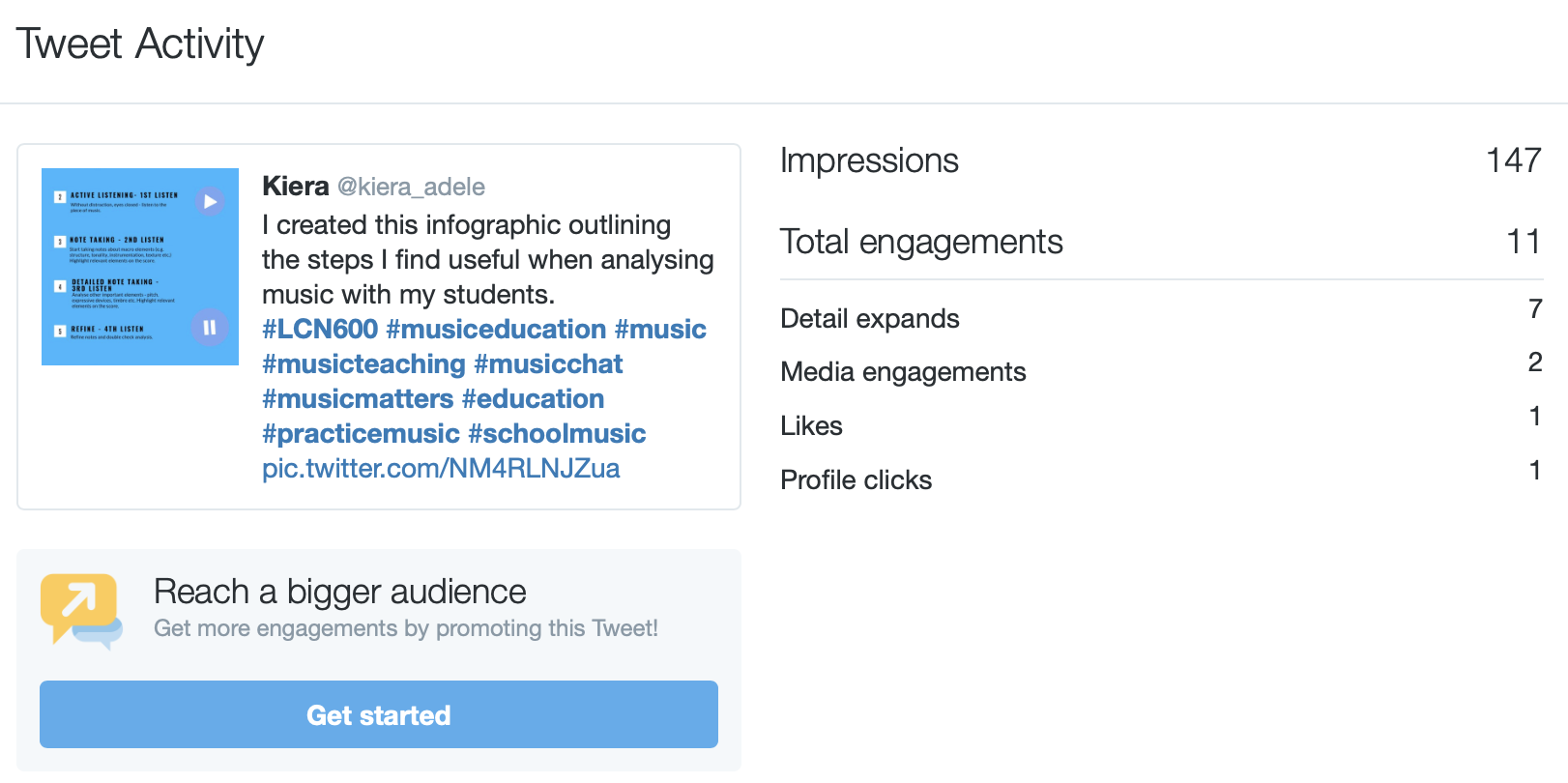
Activity from contribution #1 – infographic

The second artefact was a blog post and imbedded infographic about the new Senior Syllabus which received some engagement and views via Twitter – see the image below for the detailed activity.  Within the post I explain how I have gone back to basics within my lessons.  This can be difficult but a reminder of easy ways to break down tasks can be helpful. The lack of engagement from the extended network on both posts is considered a critical incident.  
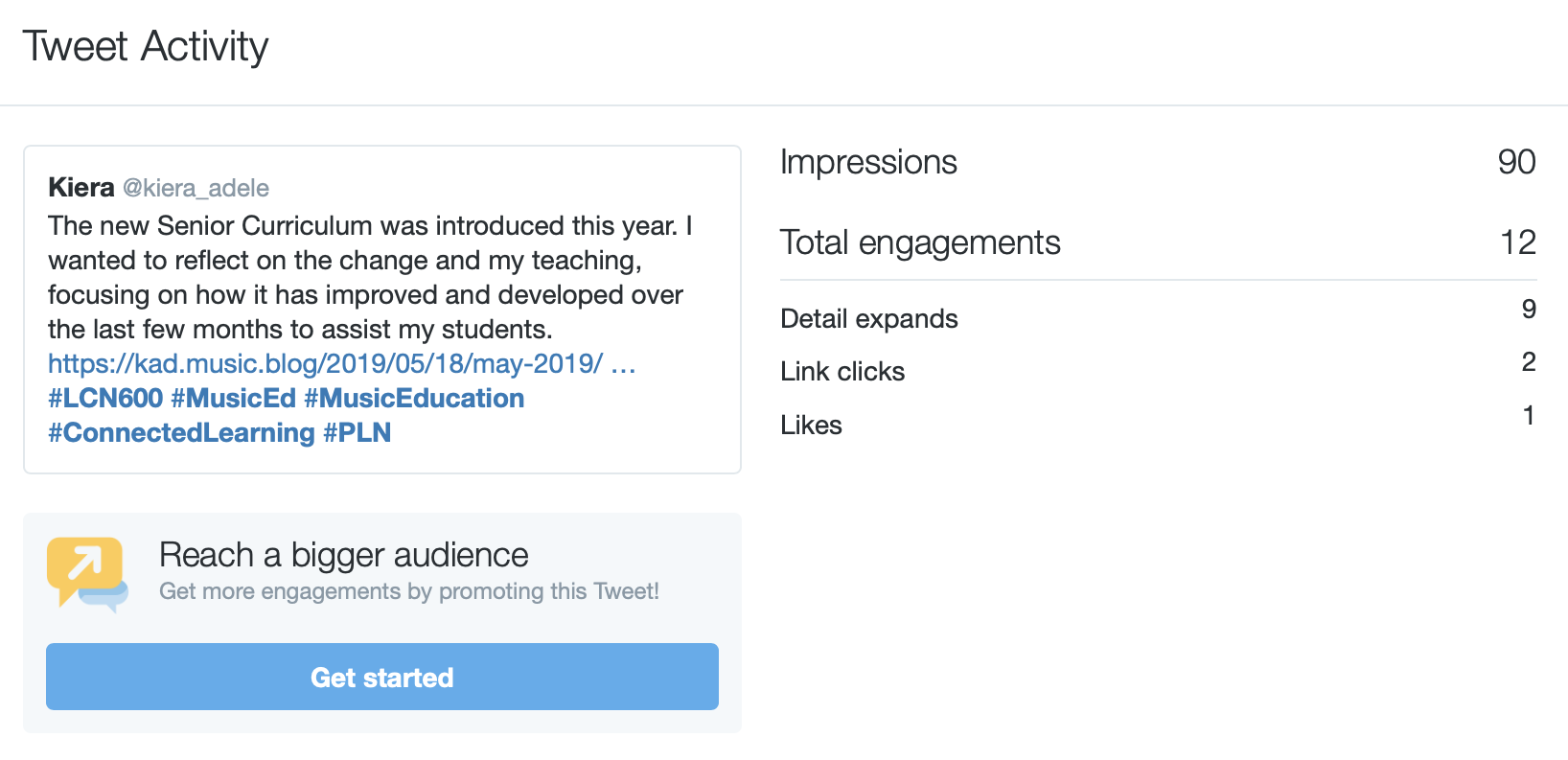
Activity from contribution #2 – blog post

Engaging with accounts and other people through the social media platforms has not increased followers or likes on either post.  It could be possible that people are lurking and finding the post beneficial without commenting or liking.  Participation can vary from observing or lurking within the PLN to actively participating (Carpenter, Krutka, & Trust, 2016b)

Contributing resources to the PLN via the hashtags has helped form knowledge capital.  Wenger (2011) outlines that knowledge capital can be produced in many ways these being personal assets (human capital); relationships and connections (social capital); resources (tangible capital); collective intangible assets (reputational capital; Transformed ability to learn (learning capital).  Resources or tangible capital is where a community or network is given access to resources from members.  This type of sharing has been evident within the closed Facebook group Queensland 2019 Senior Music/Music Extension Syllabus Teachers.  Members within this group have been sharing documents, resources and repertoire lists all contributing to the knowledge capital through resources.  The artefacts I shared within my network were resources teachers could use within their classrooms with students.  Using the scale on the Transformative Teacher Developmental Framework by Baker-Doyle (2017), my PLN activity would sit between emerging and participatory. Within the two categories of ‘knowledge construction’ and ‘relationship development’ the activity within my PLN is more advanced than technical and not at the leader phase at this point in time.  There will be an opportunity for my participation to move to leader over time. 

Through developing my PLN I have been able to expand the breadth of hashtags in which I follow via the TweetDeck, accounts and persons of interest, and groups to be involved in.  A detailed map showing where my PLN is now can be seen below.  

Developed PLN – June 2019

Reflection and Outcomes

Through developing my PLN I have found many areas of interest. I have been able to focus on senior curriculum development, instrumental teaching and classroom activities just to name a few.  There are many avenues in which it is easy to branch off to, it is easy to get lost at times!  Branching out and finding new accounts to follow and engage with has helped my PLN development.  I have been able to confirm queries I have had within my teaching through finding the content in my PLN.  The Facebook group Queensland 2019 Senior Music/Music Extension Syllabus Teachers has really helped with reaffirming some concerns or questions I have had. Within the closed group, teachers are sharing resources, asking questions and sharing repertoire for current or upcoming units. I have found this beneficial within my PLN and development of my teaching.  It is reassuring to know that others are out there finding the new syllabus challenging and that I am not alone.  I have found comfort in this and have therefore been confident in my teaching and planning.  “Just hearing someone else’s story can open one’s imagination or reveal a new perspective. And being with others who understand one’s challenge can be a relief” (Wenger, 2011, p. 22).  

I have found some great accounts and groups to follow. The accounts and hashtags can be seen on my PLN Map.  The previously mentioned Facebook page has been a great insight into what fellow teachers are doing.  Following #MusicEd via the TweetDeck has brought many other insights.  I have been able to share and engage with accounts and posts from companies and professionals. An example of this engagement can be found on Twitter and below.  

Through developing my PLN I have found that social media has a lot to offer.  Being able to connect with people who I would not normally have the opportunity to meet or see at professional development has been and will be beneficial well into the future.  Through my PLN, my digital footprint has grown from my involvement in February 2019 (as seen in the initial PLN map) through to developing my current and ever-growing PLN. I have explored and actively participated in multiple social media platforms.  My social network identity on Twitter is professional and I only share tweets that are related to my work or professional interests.  Contrasting to Facebook and Instagram which are more personal network identities. Only a few groups or hashtags are being followed through these accounts. My digital literacy has developed during the expansion of my PLN.  I have enjoyed sharing content and exploring what others are doing within the Music Teaching Profession.  There are many skills that have been refined for example consumption and sharing of content; creating and sharing of content; development, expression & management of a range of digital identities across platforms (Oddone, 2019a).  These skills have allowed me to become more confident with sharing professional content online.  

Developing my PLN has allowed for growth and development in many areas. Personally, I have been able to grow my professional learning connections and resources.  I have also been able to refine the skills and ability to share valuable content with others.  All of this while connecting with professionals and/or teachers I would not normally be connected with throughout the school year. My PLN will continue to grow, develop and change over time. There are always changes with teaching and staying across these is important to me.  Wanting to be the best teacher I can will always shape my PLN with smaller foci taking the priority occasionally.  The many interests of classroom, music technology and instrumental teaching are all included within my future PLN.  The final PLN map can be found here.  
References

Baker-Doyle, K. J. (2017). Chapter 3 Transformative teachers: Practices and profiles. In K. J. Baker-Doyle, Transformative teachers; teacher leadership and learning in a connected world (pp. 33-66). Harvard Education Press.

Carfagna, L. “. (2014). Beyond Learning-as-Usual: Connected Learning Among Open Learners .Irvine, CA.: Digital Media and Learning Research Hub.

Carpenter, J. P., Krutka, D. G., & Trust, T. (2016a). Elements of Engagement: A Model of Teacher Interactions via Professional Learning NetworksJournal of Digital Learning in Teacher Education, 150-158.

Carpenter, J. P., Krutka, D. G., & Trust, T. (2016b). “Together we are better”: Professional learning networks for teachersComputers & Education, 15-34.

Oddone, K. (2019a). LCN600 Connected Learning: Learning Resources [LCN600 Connected Learning Resource Bank]. Retrieved from https://blackboard.qut.edu.au/webapps/blackboard/content/listContent.jsp?course_id=_145767_1&content_id=_7718367_1&mode=reset

Oddone, K. (2019b). Teachers’ experience of professional learning through personal learning networks (PhD thesis). Brisbane, Australia: Queensland University of Technology.

Wenger, E. T. (2011). Promoting and assessing value creation in communities and networks: A conceptual framework. The Netherlands: Ruud de Moor Centrum.

May 2019

A reflection on how my teaching practices have refined since the introduction of the new Senior Curriculum in Queensland.


2019 saw the introduction of the new Senior Curriculum in Queensland.  This curriculum models a similar format to other states in Australia. As this is a very new approach to content, processes and assessment in Queensland, I wanted to reflect on how my teaching is going, how the students are finding it and what improvements I needed to make. 

My general focus within my Professional Learning Network (PLN) has been improving my teaching across all of my classes.  I am always trying to find new ways to engage my students in learning, motivate and inspire them about music.  This hasn’t changed but a detailed focus on the new curriculum has taken over in recent months. With the new curriculum comes new challenges.  

Reflecting upon the student achievement from last term, it was evident that I needed to change the way I was teaching the subject.  The achievement data was good, but I know my students can improve their marks. My students needed more explicit teaching of music specific techniques, skills and terminology rather than group work activities and inquiry-based learning tasks.  The goal is preparing and practicing for year 12 summative assessment.  I decided my teaching needed to evolve to better prepare the students.  I came to the conclusion of using the Explicit Instruction model which is defined by Hughes & Archer as “instruction that is systematic, direct, engaging, and success oriented” (2010, p. vii). The common model of “I do it, we do it, you do it” (Hughes & Archer, 2010) was adapted in my class.  I envision once the students become more confident, I will be able to scale-back the Explicit Instruction and add more independent activities and tasks. 

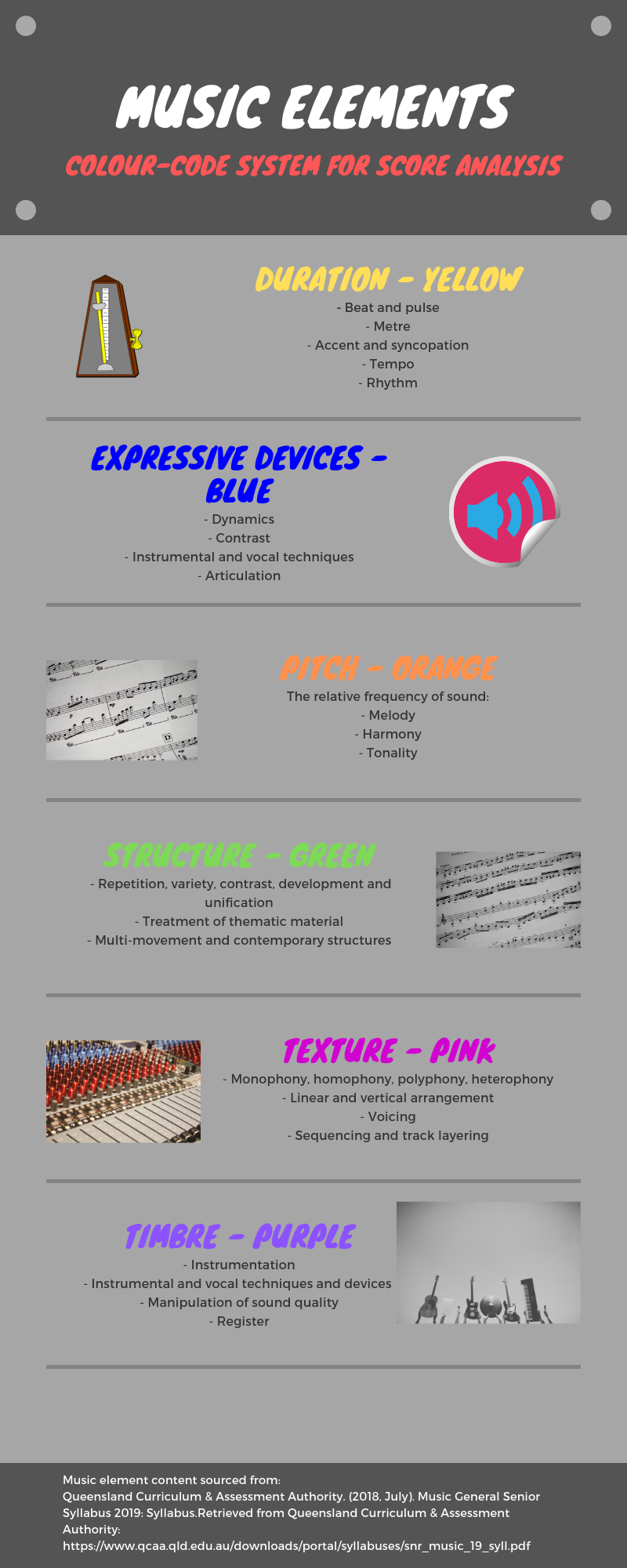
The new external exam which will be introduced in 2020 is daunting.  The unknown is a challenge.  Equipping students with techniques and skills in order to decode unseen music is a priority. A new technique I have employed with my senior students is colour coding the musical elements when analysing music. Making this a bright and colourful activity has engaged the students and has also allowed them to easily identify the elements on a music score.  This is becoming a habit for the students to identify the music elements which will hopefully assist in the external exam.
The infographic below shows the system being used within my classes.

Infographic created by K.Deakin 2019

Using this method of constructing lessons and tasks has helped the students.  I have been receiving constant feedback from the class after each activity or lesson and they have found it to be extremely helpful.  Their level of work, understanding and comprehension has improved since changing the lesson structure.  It will be interesting to see how this change influences the results over the next year.  


References

Hughes, C. A., & Archer, A. L. (2010). Explicit Instruction : Effective and Efficient Teaching. New York: Guilford Publications.

Queensland Curriculum & Assessment Authority. (2018, July). Music General Senior Syllabus 2019: Syllabus. Retrieved from Queensland Curriculum & Assessment Authority: https://www.qcaa.qld.edu.au/downloads/portal/syllabuses/snr_music_19_syll.pdf

MusicED

A Connected Learning Environment

Image sourced from Pixabay

Personal Introduction

Music has been a major part of my life since 1999.  From starting in primary school through to my current career as a music teacher, most days are filled with music.  As anyone would have experienced during their schooling and study, some educators have the ability to ignite the passion within and others unfortunately do not.  Within my own education I have had the privilege to be taught by wonderful educators. Now it is my turn to give back and educate the next generation of musicians.  I am always looking for new ways to teach my students, bring new technologies into my classroom and educate students in a way that is more effective.  Through this drive to be better and do better, the MusicED connected learning environment has been able to support my passion for music education. Personally, I have found it helpful to reach out and see what other educators are doing in their schools, see what other musicians are playing and see how the music industry is growing with constant technology advances. Being able to influence the next generation of musicians is a wonderful adventure – who knows where it will take us! 

Critical Analysis

Connected Learning Environment

Ito, et al. released the connected learning report in 2013 outlining a new way of education.  Incorporating the three spheres of learning – interest-powered, peer-supported and academically oriented (image below). When these three areas work together connected learning will take place. Within these spheres are the core properties of connected learning – production-centred, shared purpose and openly networked incorporating the experiences within the environment.  Imbedded within all of this are the design principles – everyone can participate, learning happens by doing, challenge is constant, and everything is interconnected.  The spheres, core properties and design principles will be used to critically analyse the MusicED connected learning environment.  
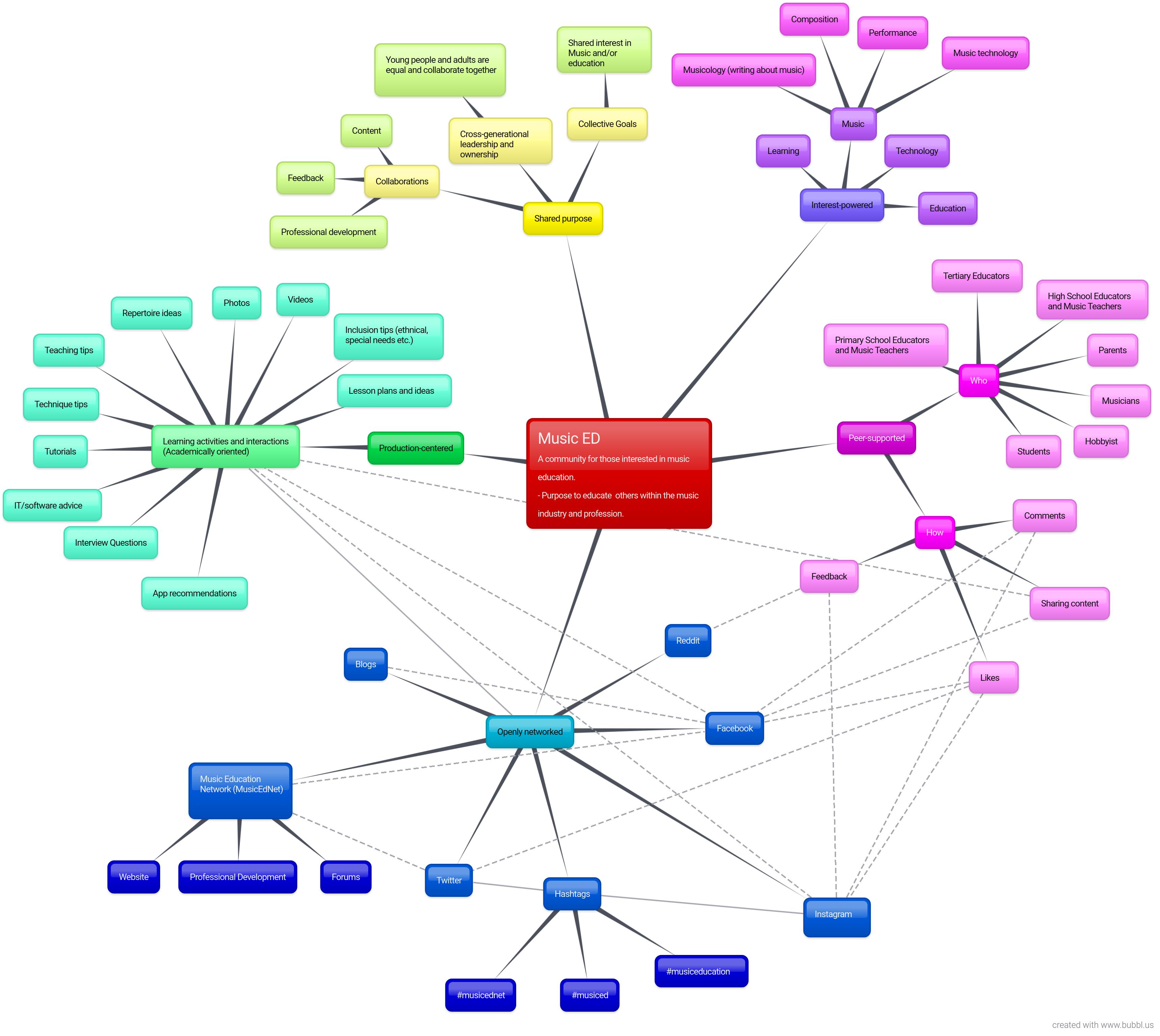
MusicED is an online connected learning environment.  The learning environment has been mapped to clearly see the connections between the connected learning framework areas and where the community exists.  

Three Spheres of Learning from Ito, et al. Connected Learning Report

Peer-supported

Through a peer-supported environment, participants are able to contribute ideas, share content and give feedback with people and resources through technology (Ito, et al., 2013), (Jones, 2015, p. 5).  The MusicEd connected learning environment encourages peer-supported learning through its many online platforms.  The platforms used are predominantly Facebook, Instagram, Reddit, blogs and websites.  As shown in the MusicED map the various platforms encourage and support activities such as video/tutorial sharing, questions on forums, suggestions, tips, and recommendations just to name a few. Participants in the environment are able to support one another through difficult decisions or challenges they encounter (Cantrill, et al., 2014).  Some challenges are brought to the community’s attention through the Reddit community requiring feedback, advice and comments from others.  The Reddit platform in particular allows participants to consult others regarding problems they may not have been able to solve themselves.  This type of peer-supported learning and interaction allows intergenerational expertise and sharing (Ito, et al., 2013). 

Ito, et al. (2013) advises through the guided reflections as to whether a peer-supported learning environment allows for socialising and hang outs.  There is minimal evidence within the MusicED connected learning environment as to whether this is occurring.  Park, Kee, & Valenzuela (2009, p. 731) state that participants in the online community may want to organise a meeting in order to talk about interests as well as gaining support.  Through the MusicED Net website and community, professional development is arranged which allows for socialising but this is not the main purpose.  There could be more opportunities for socialising within the MusicED connected learning environment and could allow young people to have more opportunities to connect with others.  

Interest-powered 

Connected learning communities need to be interest-powered where various people will have an interest in a topic or subject.  Members within a connected learning environment can influence and form the community or content through their shared personal interests and experiences (Cartun, Penuel, & West-Puckett, 2017, p. 183), (Long, 2016, p. 70).  The shared interest of the MusicED connected learning environment is Music and Education.  As seen in the MusicEd Map there can be many avenues that can present as an interest to any particular member.  Some participants might be interested in the education content and how to teach music, while others may only be interested in the practical tutorials for techniques on instruments.  The MusicED connected learning environment has the ability to enhance and educate participants in other areas that may not have been of interest to them initially.

As the Connected Learning Framework suggests young people should be able to observe through the various online platforms while allowing them to discover new interests before participating in content production (Ito, et al., 2013).  The MusicEd connected learning environment allows for young people to observe and gain knowledge in their interests.  Another area Music ED succeeds in are the opportunities and “support for young people to develop expertise around their interest” (Ito, et al., 2013).  This is evident in the Instagram community where the content shared is predominantly from a younger demographic.  It is easy to support the young demographic on Instagram with a like or comment. This allows everyone to participate, easily gain knowledge and foster learning (Siemens, 2005).   

Image sourced from Pixabay

Academically oriented 

Academically oriented learning has many benefits.  If a learning community is academically oriented learners can connect interests with academic study, community engagements and careers (Ito, et al., 2013). MusicED connected learning environment is academically oriented due to the content shared through the online platforms.  This shared content consists of lesson plans, repertoire choices, teaching tips and tutorials, all of which are shared with the purpose of educating others.  A detailed investigation into the various types of content is outlined in the MusicED map.  These various platforms of learning challenge the way learning has existed.  Learning through a connected learning environment is not often structured and is guided by adults who have power within the institutionalised format (Ito, et al., 2013). If specific learning is required learners are able to connect with the network and hopefully find the information they require (Ritter Hall & Nussbaum-Beach, 2010, p.11).  This is especially prevalent through the Reddit community where questions can be asked regarding music education and the peers can respond with their knowledge and wisdom. The advantage of technology within the connected learning environment is that there is always opportunities for learners to pace their learning and select what is relevant to them should it be a new or existing interest (Ritter Hall & Nussbaum-Beach, 2010, p.17).

Through the MusicEd Net website and extended online community there are opportunities for professional development workshops, seminars, conferences and resource sharing.  The Facebook page also offers a community section where other professional development opportunities are shared. Mentors are present within the MusicED connected learning environment as they comment and give feedback regarding content shared. For example, through the Reddit community mentees can be found in the thread specifically asking mentors for job interview advice and questioning to anticipate.  There is other mentor evidence within the other online communities on Facebook, Twitter and Instagram.  The young participants with the community are also celebrated through post likes and comments within the various platforms. 

Image sources from Pixabay

Production-centred 

MusicED’s main purpose is to share content related to music and education.  It is suggested that a production-centred learning environment should allow learners to create, share, monitor and actively participate in the content (Ito, et al., 2013).  There are many ways content is shared and produced within the MusicED connected learning environment.  Social media and digital tools allow for detailed self-expression with the added bonus of being free and accessible to the masses (Ito, et al., 2013).  The social media and digital tools which have shown to allow for production-centred focus are Facebook, Instagram, Reddit, Twitter and various blogs.  With the ease of upload to these various platforms, content can be accessible to a wide audience meaning everyone can participate including youth.  Although content that is produced can be original and include new ideas, this is not always the case with some content being reworked, shared, and edited.  These forms of content production are “valuable stepping-stones in creativity” (Ito, et al., 2013).  The MusicED connected learning environment is production-centred.  Focusing on the Instagram hashtag of #musiced content includes video tutorials, videos with snippets of lessons, classroom setups, instrument technique tips and repertoire ideas.  Not every piece of content will be relevant to each individual but there is the opportunity to engage with content that interests you specifically. The content on the other digital platforms are similar with some slight differences from site to site.  All platforms allow learning to happen by doing and allowing the challenge to be constant (Ito, et al., 2013).      

Image sourced from Pixabay

Shared purpose 

Common goals and interests can generate opportunities and connection for cross-generation and cross-cultural learning (Ito, et al., 2013).  The shared purpose of MusicED is educating participants about music and education.  This shared purpose allows youth to participate within the environment.  According to Ito, et al. (2013) there can be valuable youth participation through a variety of ways, these being “projects with collective goals, collaboration and competitions, and cross generational leadership and ownership”.  Through investigating the connected learning environment of MusicED, it is unclear whether all of these areas are imbedded.  There is, however, evidence of cross generational leadership.  Through the various social media platforms, people of all ages are sharing, creating, commenting and liking content on the platforms.  This collaboration and cooperation from participants is valuable (Dirckinck-Holmfeld, Hodgson, & McConnell, 2012, p. 296). Currently there is no evidence of competitions through the platforms. This could be an area where the MusicED community could improve on to enhance further participation from the wider community.  The only project with collective goals is the professional development sessions run by MusicEd Net. These sessions having the clear focus of addressing a curriculum goal or introducing a new teaching tool.  There could be more of a focus on collective projects throughout the other online platforms.  

Openly networked 

Image sourced from Pixabay

“Technology makes connecting and collaborating so easy. But most important are the relationships that learning technologies make possible” (Ritter Hall & Nussbaum-Beach, 2010, p. 10).   Without these connected learning technologies, learning within the MusicED environment would not be possible. As seen in the MusicED connected learning map the platforms which are frequently used are Facebook, Reddit, Instagram, Twitter, blogs, and websites.  Richardson & Mancabelli (2011, p. 53) suggests that Facebook allows people to be connected to their interests and find professional organisations through this connection.  This is seen through the MusicED Net Facebook page.  Their Facebook page allows participants and the community to be linked to various professionals and their organisation, mostly companies or education institutions.  Within the professional development seminars and conferences organised, many of these presenters are affiliated with universities; software or music equipment companies; or their own music or education related businesses linking these organisations to the connected learning environment.  The participants are then able to link with these organisations if it relates to their interests.  

According to Ito, et al. (2013) an openly networked community should have the following “cross institutional networks; multiple points of entry and outreach; open assessments, badges, and certifications; open access and IP”.  MusicED is a cross institutional network with access from many contexts.  For example, there is evidence from the Twitter hashtag #musiced that cross institutional networking is taking place.  university lecturers, school teachers, musicians and companies/organisations are all sharing content that is widely available to the community. Similar cross institutional networking is also occurring on the other social media platforms.  Within the connected learning environment there are multiple points of entry for the public being students, parents, educators, and hobbyists to enter the network.  The participants within the connected learning environment may not know who is involved in the platform with interactions taking place both directly and indirectly (Anderson & Dron, 2014).  There is minimal evidence of assessments, badges or certifications taking place within the network.  Learning is informal, unstructured and takes place at the learners own pace.  The only area where certifications are given are through any professional development that is completed within a particular section of the network.  Therefore, more assessments could be added to foster visible and recognised learning to the public community.  Within the wider MusicED connected learning community there is ample evidence of content, resources and tools being readily accessible through the open platforms.  “It is hoped that through technology and collaboration with peers and mentors, learners can follow their own interest-driven learning path (Long, 2016, p. 70).  

MusicED connected learning environment has proved to be a valuable resource for many within the music industry. Although there are some potential areas of improvement, the community as a whole is supporting learning through its many online platforms and connections.  

References

  1. Anderson, T., & Dron , J. (2014). TEACHING CROWDS: LEARNING AND SOCIAL MEDIA.Edmonton: AU Press.
  2. Cantrill, C., Filipiak, D., Garcia, A., Hunt, B., Lee, C., Mirra, N., . . . Peppler, K. (2014). Teaching in the Connected Learning Classroom.Irvine, CA: Digital Media and Learning Research Hub.
  3. Cartun, A., Penuel, W. R., & West-Puckett, S. (2017). Blurring the Boundaries Between School and Community: Implementing Connected Learning Principles in English ClassroomsJournal of Adolescent & Adult Literacy, 61(2), 183–190.
  4. Dirckinck-Holmfeld, L., Hodgson, V., & McConnell, D. (2012). Exploring the Theory, Pedagogy and Practice of Networked Learning.New York, NY: Springer.
  5. Ito, M., Gutiérrez, K., Livingstone, S., Penuel, B., Rhodes, J., Salen, K., . . . Watkins, S. (2013). Connected Learning: An Agenda for Research and Design.Irvine, CA: Digital Media and Learning Research Hub.
  6. Jones, C. (2015). Networked Learning: An Educational Paradigm for the Age of Digital Networks.Switzerland: Springer International Publishing.
  7. Long, C. D. (2016). There Is a There There: Connected Learning Communities in a Digital Age. Planning for Higher Education Journal , 61-85.
  8. Park, N., Kee, K. F., & Valenzuela, S. (2009). Being Immersed in Social Networking Environment: Facebook Groups, Uses and Gratifications, and Social OutcomesCYBER PSYCHOLOGY & BEHAVIOR, 729-733.
  9. Richardson, W., & Mancabelli, R. (2011). Chapter 2: Becoming a networked learner. In W. Richardson, & R. Mancabelli, Personal learning networks; using the power of connections to transform education(pp. 33-57). Hawker Brownlow.
  10. Ritter Hall, L., & Nussbaum-Beach, S. (2010). Defining the Connected Educator. In L. Ritter Hall, & S. Nussbaum-Beach, The Connected Educator: Learning and Leading in a Digital Age(pp. 9-24). Bloomington, IN: Solution Tree Press.
  11. Siemens, G. (2005, January). Connectivism: A Learning Theory for the Digital Age. Retrieved from http://www.itdl.org/journal/jan_05/article01.htm

All images were sourced from Pixabay.